

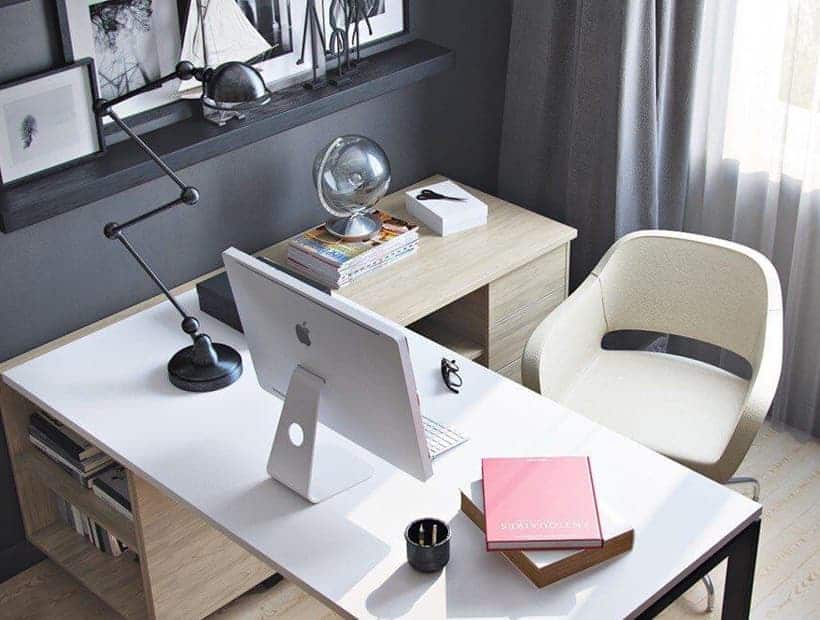
Creating a home office in an apartment is not just a task of organizing a workplace, but an opportunity to transform the space so that it inspires productivity and comfort. After all, for most of us, working at home has become an integral part of life, and it is important that the office not only meets the functional requirements, but also harmoniously fits into the interior. In this article, we will share practical tips on how to create a stylish and functional office that is both comfortable, elegant and perfectly suited to your needs.
Determine needs and functionality
Before you begin decorating your home office, it’s crucial to identify the tasks you’ll be working on in that space. Doing so will guide you in selecting the appropriate furniture and tools that will best support your workflow.
Type of work
Identify the type of work you’ll be doing. Based on this, you’ll need to arrange your space accordingly:
- Administrative work: for working with documents and reports, you need a spacious desk with storage space for folders, papers and stationery. It’s also not unreasonable to add cabinets or shelves for files.
- Creative work: if your work involves design, writing or creative processes, your workspace should be comfortable and inspiring. It is important to consider good lighting and a place to store creative materials such as paints, books or tools.
- Technical work: for working with multiple monitors or a powerful computer, it is important to choose a desk with enough space for devices and accessories. It is also worth considering the need to store technical equipment, cables and other gadgets.
Tools needed
Think through what tools you need to get the job done. These could be a laptop, printer, scanner or specialized devices. Make sure there is a suitable place for all these items so as not to create clutter.
Space constraints
When dealing with limited space in your apartment, consider selecting compact, multifunctional furnishings. For instance, desks equipped with integrated shelving or cabinetry for document storage, alongside mobile units that offer easy portability, can significantly optimize your available space. These thoughtful solutions ensure the efficient use of every inch while maintaining a clutter-free and harmonious interior.
Choosing a place for an office
Choosing the optimal location for your home office within your apartment is pivotal, as it profoundly influences both your comfort and productivity. Taking into account your lifestyle and individual preferences, it is imperative to identify a space that nurtures concentration and stimulates creativity.
Suitable locations for a home office:
- A corner of the room presents an ideal solution for those who prioritize privacy and tranquility. This secluded spot enables the creation of a focused work zone with minimal interruptions, particularly if the room boasts a generous window, allowing natural light to flood the space throughout the day.
- Living room – If you work from home but don’t want to lose touch with family or other members of the household, the living room can be a great place for an office. Here, it is important to choose furniture so that the office area harmonizes with the overall interior.
- Bedroom – for those who value tranquility and privacy, the bedroom can be a great choice. This space will help you focus and avoid outside distractions. However, it is important that the work area does not overwhelm the relaxing atmosphere.
- Balcony or loggia – if you like to work outside or surrounded by nature, a balcony or loggia can be a good alternative. This is especially true for people who want to work in a quiet environment while enjoying the fresh air.

Comfortable furniture and organizational solutions
Home office furnishings must strike a harmonious balance between design and utility, ensuring both comfort and efficiency throughout the workday. When choosing pieces, it’s crucial to consider not only their visual appeal but also their functionality, crafting a workspace that fosters productivity and meets your practical needs.
The basic elements of home office furniture:
- Desk – opt for a desk that is compact yet offers ample space for your laptop, documents, and other work essentials. It should provide comfort for extended hours of work and seamlessly integrate into the room’s layout.
- Chair – the chair should be ergonomic and support your back, especially if you spend several hours in a row at the computer. It is better to choose a model with adjustable height and the ability to tilt the backrest for maximum comfort.
- Shelves and drawers – they will help to organize the working space, getting rid of unnecessary papers and accessories. Shelves for storing books or documents and drawers for small items will make the office more organized.
Lighting and ergonomics
Lighting and ergonomics are pivotal elements that directly influence both your comfort and productivity. Adequate lighting reduces eye strain, while an ergonomic setup encourages proper posture and mitigates fatigue. Attending to every detail within your workspace is essential in crafting an environment that fosters sustained, efficient work over time.
Basic principles of lighting and ergonomics:
- Natural light is ideal if the location of the workstation allows. Try placing your desk near a window to maximize daylight during the day. This will not only help save energy, but also improve your overall health.
- Artificial lighting – if there is a lack of natural light, it is important to choose adjustable lamps. They should provide soft light without glare or shadows so as not to strain the eyes. A desk lamp with adjustable brightness and light direction is an excellent solution for working at night.
- Ergonomics – take care of proper organization of your workplace. The chair should support your back and be comfortable for long sessions. The desk should be at the right height to keep your elbows at a 90-degree angle and the monitor screen at eye level so you don’t strain your neck.
Décor and little things that create an atmosphere
Decor and subtle details play a crucial role in defining the atmosphere of a home office. They not only elevate the space but also help cultivate an environment that is both inviting and inspiring. Achieving a balance between functionality and visual appeal is vital for crafting a workspace that is both practical and aesthetically engaging.
Ideas for decor and little things that create atmosphere:
- Minimalism in decor – a few stylish accessories, plants or paintings can add sophistication without overloading the space. Try not to clutter the office with unnecessary items to keep it clean and tidy.
- Choose a calming color palette featuring soft neutral tones like beige, gray, or white, and incorporate lively accents through decorative elements such as cushions, artwork, or desk accessories. This blend of subdued hues and vibrant splashes of color will cultivate an uplifting environment, enhancing both your creativity and overall mood.
- Green plants – they not only decorate the office, but also improve the microclimate, purifying the air and adding freshness to the space. A few small plants on a desk or shelf will give the room a lively energy.
- Small things for convenience – quality accessories such as laptop stands, comfortable headphones, organizers for stationery or stylish tea cups will help not only to create comfort, but also to improve the quality of work.